

By Clement Warrie
Conventional leadership models often position the leader as elevated above the governed. But the Governor of Akwa Ibom State, Pastor Umo Eno, has, on available evidence inverted this hierarchy and forced governance to take a knee. Not in protest or defiance, but in deep deference and loyalty to the people’s will.
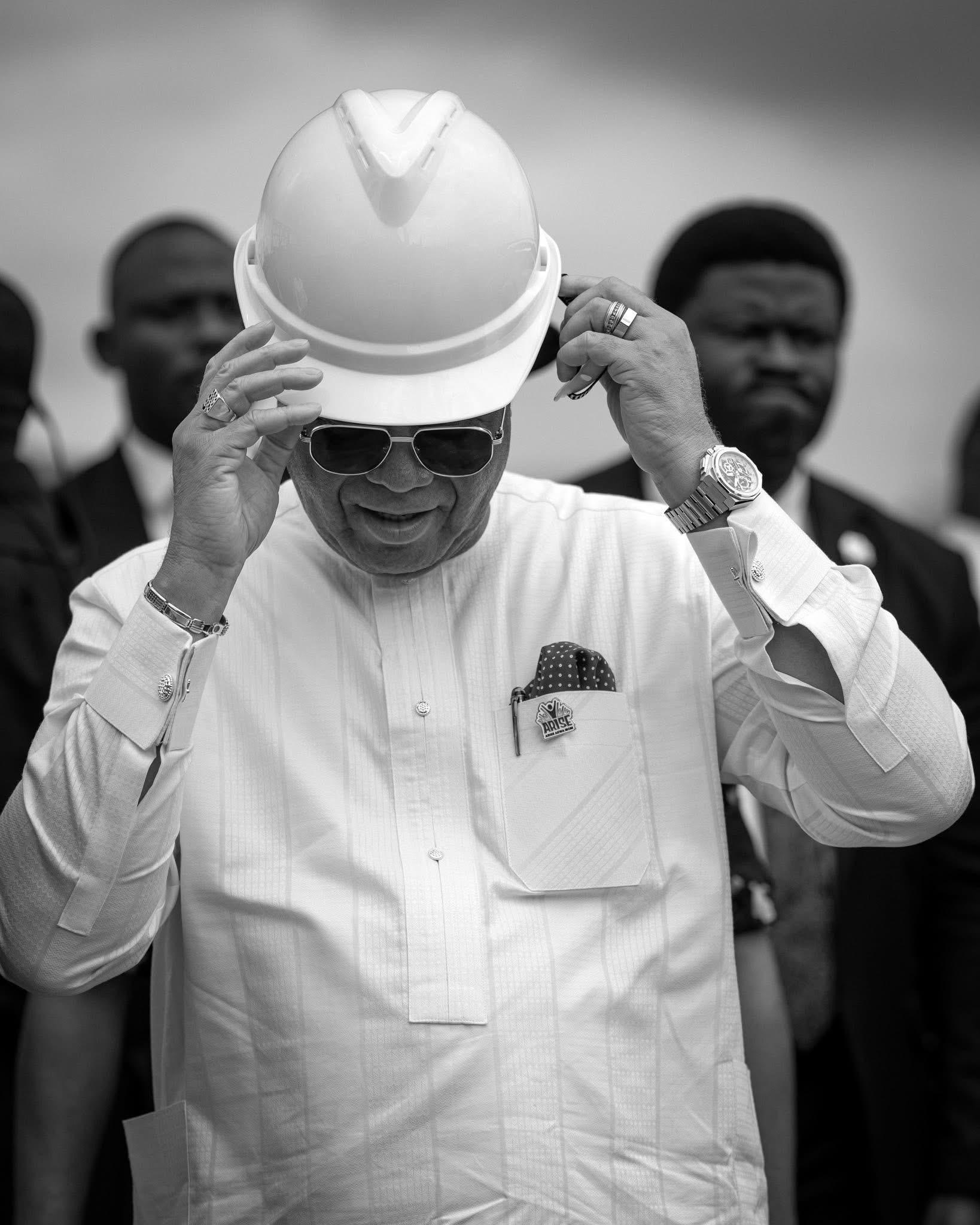
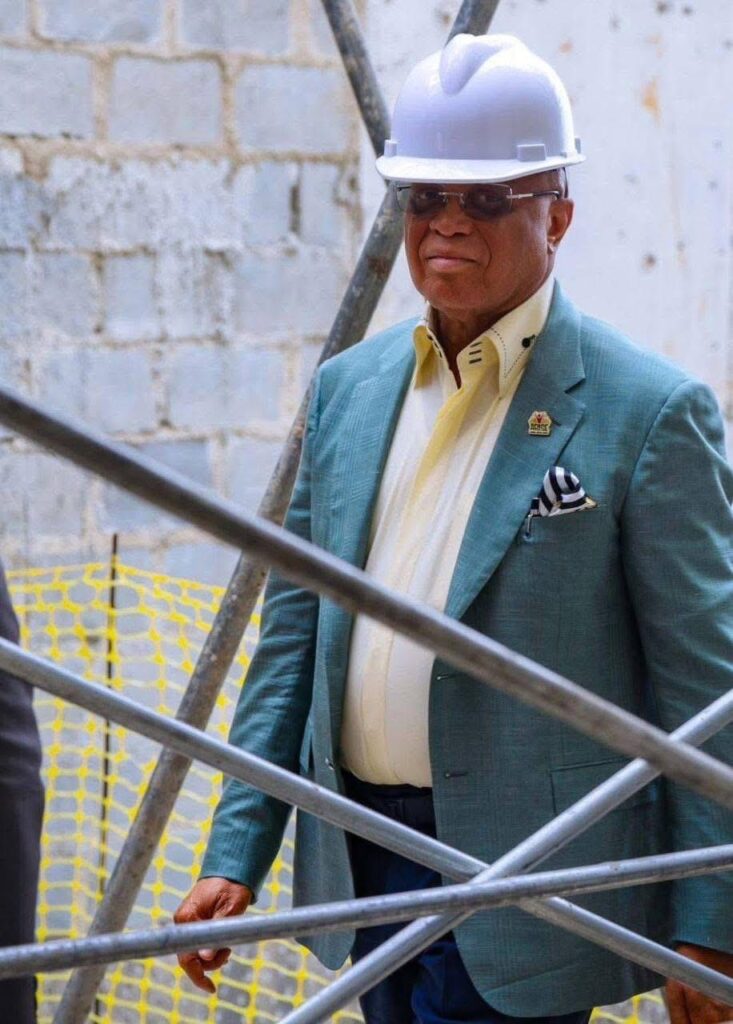
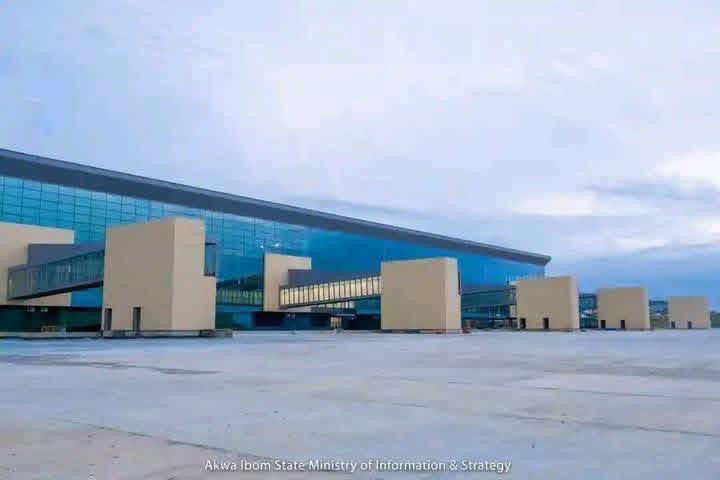
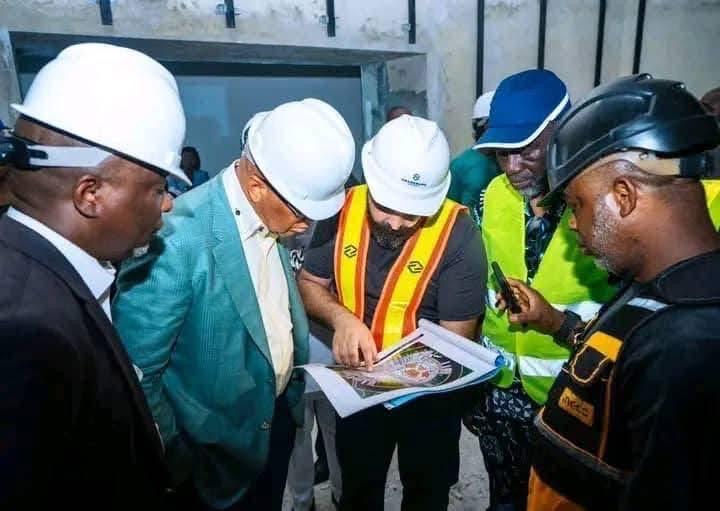
The recent photographs of Governor Umo Eno’s inspection tour of projects along the Tropicana axis, home to the Ibom International Hotel and the International Conference Center, are a classic and vivid example of leadership that kneels.
The fact that these mega structures sat abandoned for fifteen years and are now being revived to offer premium event spaces, economic catalysts, and a restored sense of civic pride tells everything about Governor Eno’s leadership. It tells of a man with a strong political will to say “this political inertia, this tradition, ends here.”
It was the late Nigerian political theorist, Claude Ake, who described the tragic habit of Administration abandoning the legacy of its predecessor as the “curse of intergenerational discontinuity in governance”
Today, that chain has been broken, but not by accident. For Governor Eno, the shift in political engagement had to flow from his pastoral instinct, upbringing or both. Whatever the source, serving the people equitably has been manifested in his deep focus on welfare, compassion, and tangible improvements to the lives of Akwa Ibom people.
The governor’s word confirmed this: “I promised during my campaign that I will complete the projects that could not be completed by my predecessors,” he said. And again: “I came not only to deepen peace and unity in my state, but to deploy my finisher’s anointing, especially on projects that may have gulped billions of our state’s resources already.”
That phrase, “finisher’s anointing”, is not empty rhetoric. It is fidelity to a task that demands sacrifice. In the governor’s case, the sacrifice is political capital spent not on new, photographable inaugurations but on the frequently, unglamorous optics of cross-administration project completion.
In all of this, Governor Eno is not asking, “What will advance my legacy?” He is asking, “What does a faithful servant do?” “What do the people stand to gain?”
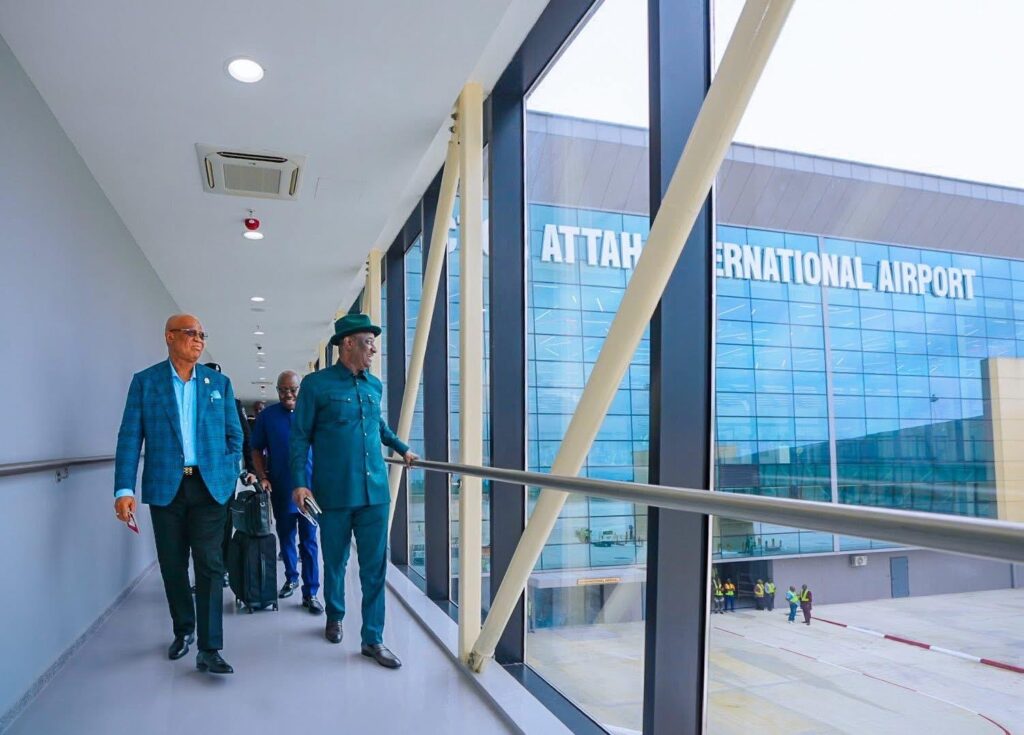
Just a week ago, a historic event took place that had the entire nation’s eyes feasting on Akwa Ibom as it launched its first international flight from the neo-terminal of the Victor Attah International Airport. That single departure has opened direct access to global trade, cut travel time for businesses and investors, and placed the state on the map as a viable destination for tourism and investment.
Yet the real story is not merely the flight. It is the pattern behind it. A government choosing to expand on what was started, and to build for the people who actually conferred the mandate.
Governor Eno did not conceive the airport. He simply refused to let Akwa Ibom remain an island in the sky. And in doing so, he is kneeling to the desire of every citizen to belong to a connected, competitive, and visible state.
I must confess that in writing this piece, several titles came to mind. One was “Leadership is Sacrifice.” Another, “Loyalty as a Verb.” And then “The Art of Killing Ego in Governance.” Each of these discarded titles captures, in its own way, the leadership essence of Governo Eno and the shift in political attitudes and engagement taking place in Akwa Ibom State.
One that came close was “The Art of Killing Ego in Governance,” The theologian Henri Nouwen in his book “In the Name of Jesus” wrote that “The leader of the future is a person who is so deeply rooted in God that he or she can afford to be irrelevant.” Governor Eno, in this case, has muted himself for a higher good. Yet, in the end, it was “Kneeling to the People” that best describes his humility, humanity, and service.
But no leader escapes critics in spite of their good works. To do so would make useless the Ibibib adage that says “owo imikpaha ibokhoke utikpe enyin” translated to mean, a man cannot escape the vicissitude of life until he departs this world.
But Theodore Roosevelt offered a solace when he wrote: “It’s not the critic who counts; the credit belongs to the man in the arena.”
Governor Eno knows the arena too well.
He knows his critics also come in two forms: the irresponsible attackers, and the quibblers over minor matters. In recent times, the quibblers argue that finishing his predecessors’ projects is an aberration, that he should focus solely on his own legacy. But he is not buying it. He understands that it is the same entrenched political absent-mindedness that has kept Akwa Ibom divided along partisan lines and bloc loyalties.
He also understands that when partisan lines harden into bloc loyalties, and loyalty to a faction supersedes loyalty to a people, then politics ceases to be the art of governance and becomes something less than an art.
His refusal to play that game is not naivety. It is a calculated, courageous break from the Nigerian political norms. By completing abandoned projects regardless of which political figure initiated them, Governor Eno declares loyalty not to bloc, not to party, not to predecessor or successor, but to the people.
And bloc loyalties, more than critics, are rooted on fealty to a powerful political figure. This loyalty can ferment deep internal fractures capable of undermining political growth.
But Governor Eno is unfazed. He is unbothered by insinuations about his loyalty to Akwa Ibom people. To him, loyalty is a verb, not noise, not “going from one house to another,” It is action, and not a pandering to emotions.
Loyalty is insisting on completing the projects of his predecessors no matter the financial burden. Loyalty is insisting on facility upgrades of the Ibom Hotels and Golf Resort, a project built many years ago by Obong Arc Victor Attah.
It is loyalty to the Akwa Ibom brand that has also seen the governor taking on the carcasses of a hotel and the conference center project and rebuilding them brick by brick.
Political pundits say loyalty, whether to a political bloc or to the people, should be altruistic, measurable, and consistent.
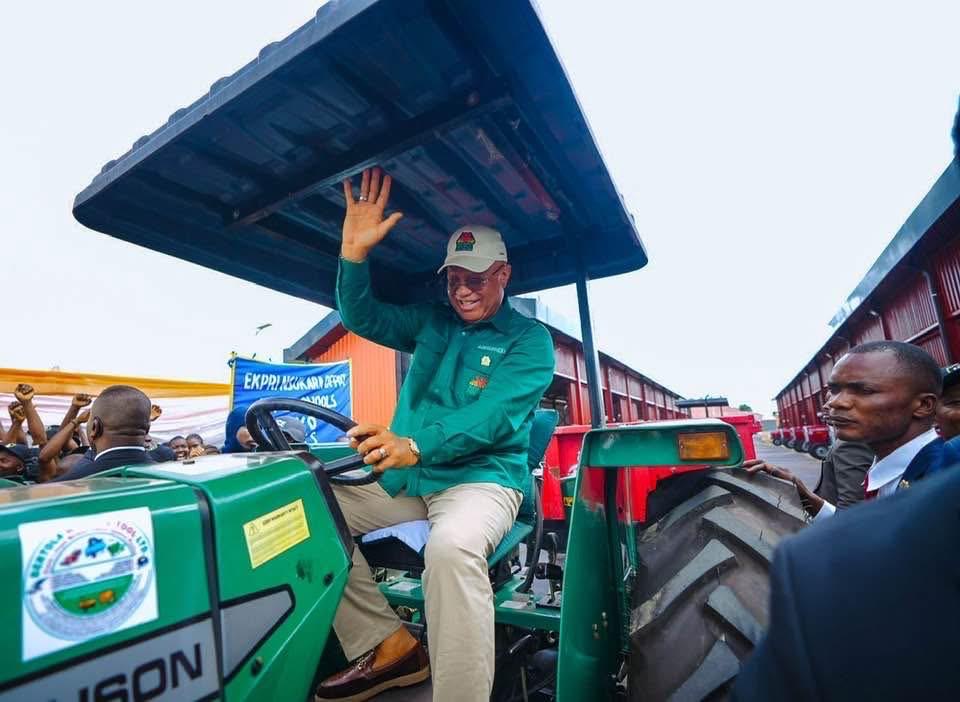
For this, Governor Eno’s record speaks in numbers. Since the inception of his administration, he has initiated 94 road projects, with 25 bridges, eight of them dual carriageways. He has also funded 41 inherited road projects, with 14 bridges. Every kilometre of these roads completed is a farmer’s access to market. Every bridge rebuilt is a child’s path to school. Every brick laid on an abandoned hotel is a worker’s wage, a tourist’s stay, and an investor’s confidence.
In just three years, he has paid ₦82 billion in gratuities and pensions, clearing two-thirds of the ₦120 billion backlog he inherited from past administrations. This is how leadership kneels to the people.
But loyalty, whether to the people, institution or to country, comes in shades and hues. A classic example is Edwin Stanton, Abraham Lincoln’s Secretary of War, who made no secret of his disdain for the president, his boss. He even called him “gorilla” behind his back, cuts him off in meetings, and dismisses his manner as “sentimental nonsense.”
Yet when generals and radicals approached Stanton in 1862 to join a plot against Lincoln, he refused. He quietly reassigned the disloyal officers, buried their funding requests, and kept Lincoln in the dark to protect him from the fallout.
When asked why he shielded a man he did not like, Stanton replied, “I don’t have to like him to be loyal to this country. And this country needs him.”
Lincoln later said, “Stanton is a difficult man, but he has never once failed me where it counts.”
The historian Doris Kearns Goodwin in “Team of Rivals,” called this “the crucible of loyalty” loyalty not to the person, but to the office, to the nation, to the people.
There is a great similarity in Governor Eno’s loyalty to the people and that of Edwin Stanton.
Stanton had stayed loyal to the office despite not particularly liking Lincoln. Eno, on the other hand, stays loyal to his predecessors and the people by finishing the work they started.
Stanton’s loyalty was holding the line during existential crisis. Governor Eno’s loyalty is about moving the line forward, from emotions and partisan vanity to collective gains.

Leave feedback about this